Is Polyjacking Worth It? The Cost vs. Benefit for Utah Valley Homes
Published on October 17, 2025
If you've noticed a sinking driveway, an uneven patio, or a cracked sidewalk on your Utah Valley property, you're faced with a decision: ignore it, replace it, or repair it. While ignoring the problem can lead to worsening damage and safety hazards, the cost of full concrete replacement can be daunting. This is where polyjacking, or concrete lifting, enters the picture as a modern, efficient solution. But is it truly worth the investment? Let's break down the cost-benefit analysis.
The Direct Cost Savings
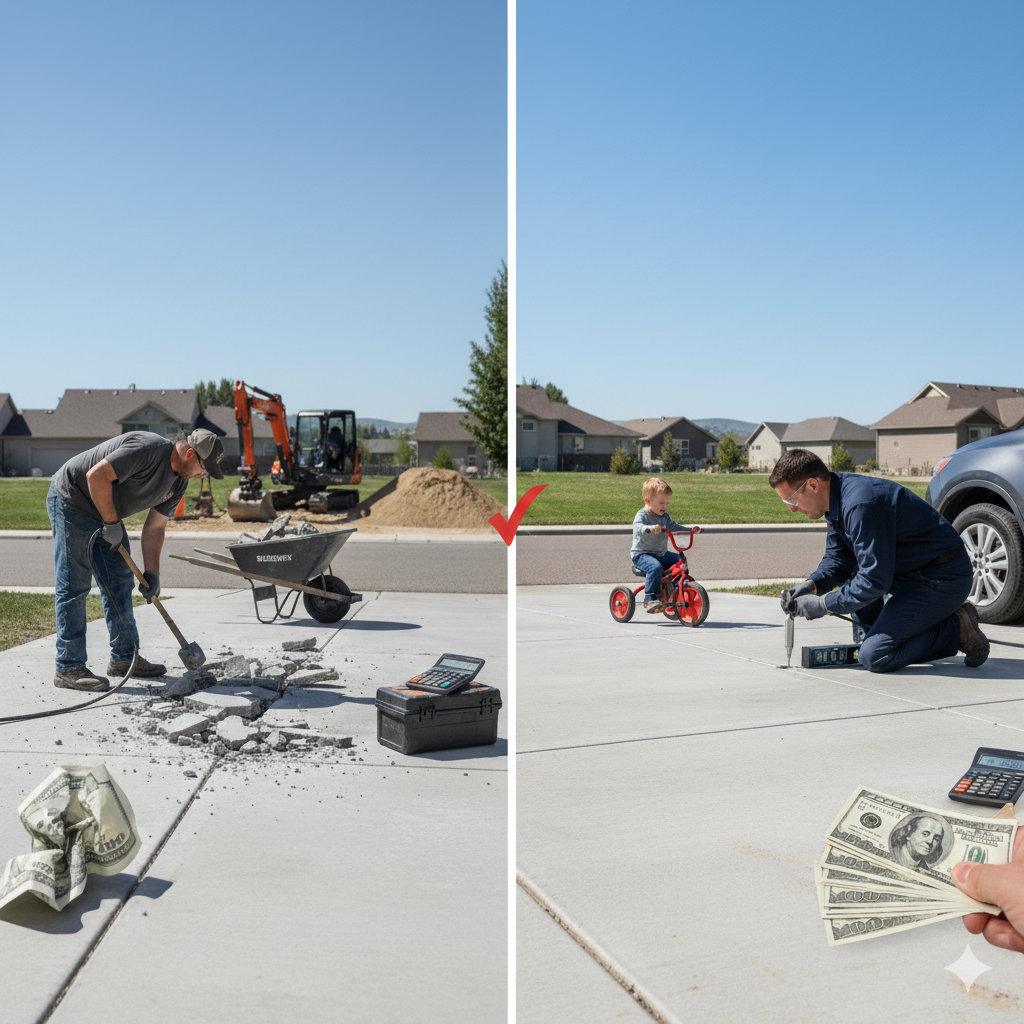
The most immediate and compelling benefit of polyjacking is often the cost. Tearing out and replacing a concrete slab is typically a labor-intensive process involving demolition, hauling away debris, framing, pouring new concrete, and a lengthy curing period. On average, polyjacking can cost anywhere from 50% to 70% less than replacement for the same area. For a multi-slab driveway or a large patio, this potentially translates into thousands of dollars in savings. While the materials are advanced, the process is generally efficient, leading to significantly lower labor costs compared to replacement, making it a budget-friendly option for many homeowners.
The Value of Time and Convenience
Consider the disruption involved in a full concrete replacement. The property becomes a construction zone for several days, often involving heavy equipment that could potentially damage lawns and landscaping. After new concrete is poured, waiting a week or more before driving on a new driveway might be necessary. Polyjacking, in contrast, is minimally invasive. Small, specialized equipment is used, and most residential jobs are completed in just a few hours. The polyurethane foam typically cures within 30 minutes, meaning treated sidewalks can often be walked on immediately, and driveways may be ready for vehicle traffic the very same day. This convenience factor is a massive benefit.
Considering a Longer-Lasting Solution
One common misconception is that polyjacking is merely a temporary "patch." High-density, structural-grade polymer used in professional polyjacking is waterproof, meaning it generally won't wash away or erode like the material used in traditional mudjacking. It's also typically inert and doesn't break down or decompose in the soil. Crucially, polyjacking aims to address the root cause of the problem. The expanding foam compacts loose soil beneath the slab, creating a more stable and solid foundation. Simply replacing concrete without addressing underlying soil issues can mean the new slab might start sinking again. Polyjacking often provides a more lasting fix by stabilizing the base.
Protecting Property Value
Uneven, cracked concrete can detract from a home's curb appeal and overall perceived value. It might also raise concerns for potential buyers about underlying issues. Fixing the problem efficiently and effectively with polyjacking eliminates tripping hazards, improves the property's appearance, and demonstrates proactive maintenance. It's often a smart investment that not only solves an immediate problem but also helps maintain or even increase a home's market value.
When weighing the potential cost savings, the convenience, and the long-term durability, polyjacking presents a compelling case. For many Utah Valley homeowners, it represents an outstandingly worthwhile investment—a smarter, faster, and effective way to restore the safety and beauty of their property. If dealing with sunken concrete, don't wait. Get a free quote today and see how affordable a lasting solution can be.