Polyjacking vs Mudjacking in Utah County: Which Concrete Repair Method Is Better?
Published on April 23, 2026
One of the most common questions people ask online before hiring a concrete repair company is simple: what is the difference between polyjacking and mudjacking? If your driveway, sidewalk, patio, or garage slab is sinking in Utah County, that question matters because both methods aim to raise settled concrete, but they do it with different materials and different tradeoffs.
For homeowners comparing quotes in places like Provo, Orem, and Lehi, the better choice usually comes down to slab condition, access, long-term performance, and how quickly the surface needs to be used again.
What is mudjacking?
Mudjacking is the older method. It lifts concrete by pumping a heavy slurry of water, soil, sand, or cementitious material beneath the slab. As the material fills the void below, pressure raises the concrete upward. Mudjacking can still work in some situations, especially where budget is the main concern and conditions are a fit for a heavier fill material.
What is polyjacking?
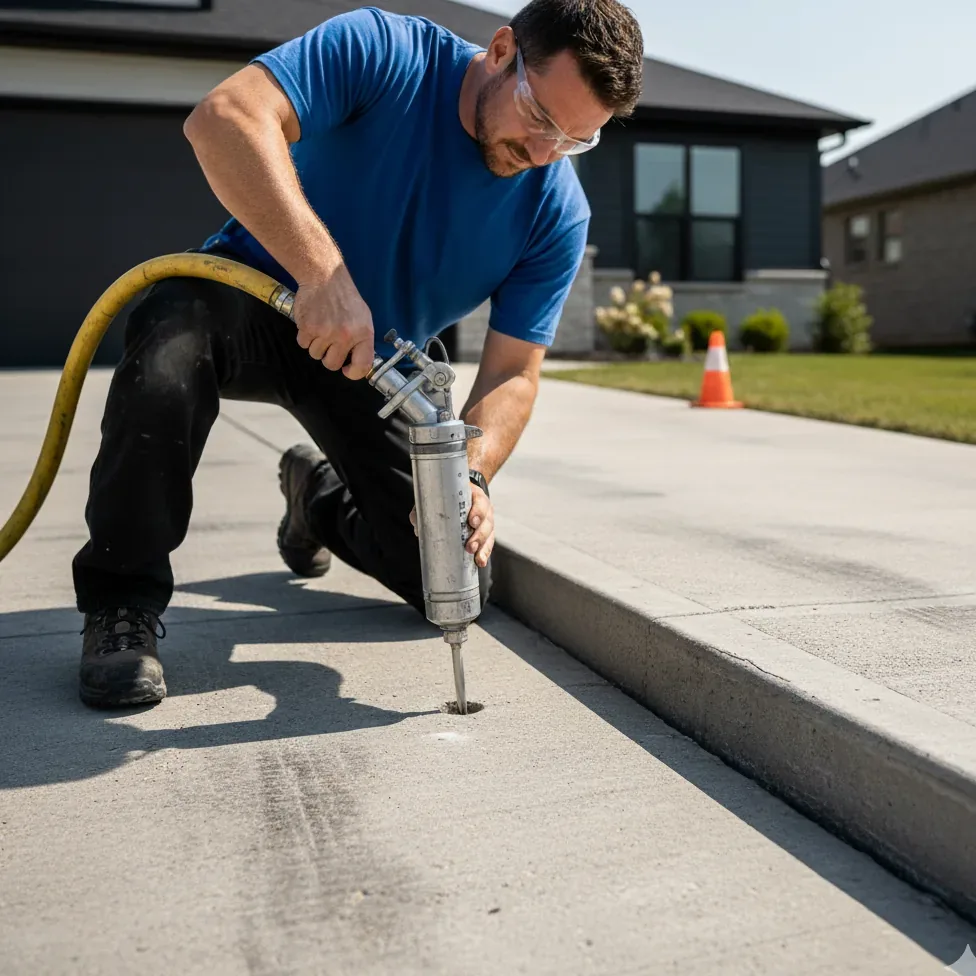
Polyjacking uses lightweight polyurethane foam instead of slurry. The foam is injected beneath the slab through small holes, expands into empty space, fills voids, and lifts the concrete. Because the material is lighter and cures faster, polyjacking is often chosen for higher-traffic residential slabs and for situations where speed and water resistance matter more.
The biggest differences homeowners usually care about
- Material weight: Mudjacking uses heavier fill. Polyjacking uses lightweight foam.
- Hole size: Polyjacking typically uses smaller injection holes.
- Cure time: Polyjacking is usually ready for use faster.
- Water resistance: Foam generally handles moisture better than slurry-based fills.
- Precision: Polyjacking is often better for fine adjustments on walkways, patios, and residential flatwork.
Which one lasts longer?
This is one of the most common questions homeowners ask. In many cases, foam lifting lasts longer because the material is lightweight, water resistant, and does not add heavy mass to unstable soils. That does not mean every mudjacking repair fails quickly or every foam repair lasts forever. The real answer depends on soil support below the slab, drainage around the slab, and whether the root cause of settlement is addressed.
That is why pages like void filling and soil stabilization matter. The repair method matters, but the support conditions under the slab matter just as much.
Which one is more affordable?
Mudjacking can have a lower upfront price in some markets. Polyjacking can cost more initially because of the material and equipment involved. But homeowners often compare more than the quote itself. They also compare how fast the slab is back in service, whether the repair is likely to hold up in wet conditions, and whether a lighter material is a better fit for the area being repaired.
If the slab is in a visible, high-use area like a driveway or sidewalk, many people prioritize clean installation, smaller holes, and faster use over the cheapest starting number.
When polyjacking is often the better fit
Polyjacking is often the better fit when homeowners want a faster return to use, smaller drill holes, a lighter material under the slab, and better performance in moisture-prone conditions. That makes it especially relevant for driveways, front walks, patios, and garage floors around Utah Valley homes.
Frequently Asked Questions
When the real answer is not about either method
Sometimes the right answer is neither method. If the slab is badly broken, crumbling, or structurally too damaged, lifting may not be the best repair path. In that case, the decision becomes a lift-versus-replace question instead. That is why people also search questions like can cracked concrete be lifted? and when should concrete be replaced instead of raised?
If you are comparing options for a specific slab, the next useful step is to match the problem with the right page: driveway concrete lifting, garage floor leveling, or the broader services hub. If you are ready to talk through the repair, request a quote.