Concrete Lifting vs Replacement: How to Decide in Utah County
Published on April 23, 2026
One of the highest-intent questions people ask before hiring a concrete repair company is concrete lifting vs replacement. That is a buyer question, not just an informational one. Homeowners are trying to decide whether they can save the slab they already have or whether they need to pay for tear-out and a full new pour.
In Utah County, the right answer usually depends on three things: the condition of the slab itself, the soil support below it, and how much disruption the owner is willing to take on. That is why this decision often overlaps with questions like can cracked concrete be lifted and why concrete keeps sinking.
When concrete lifting usually makes sense
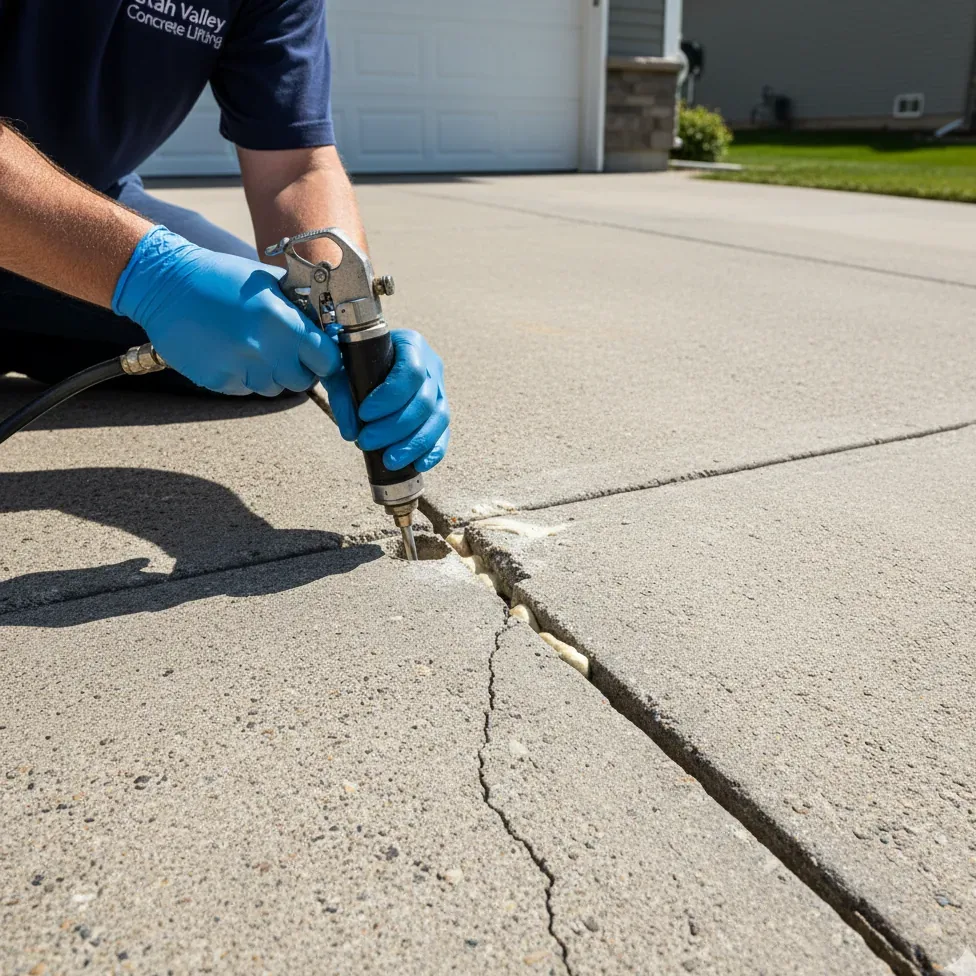
Lifting is often the better choice when the slab is still basically intact and the main problem is settlement. If the concrete has dropped because of erosion, weak fill, or empty space below it, raising the slab can restore position without the cost and downtime of demolition and replacement.
- The slab is sunken but still structurally usable.
- The main problem is a void or unstable support below the slab.
- The owner wants faster use and less site disruption.
- The area is a good candidate for polyurethane lifting rather than a full tear-out.
That often applies to a settled driveway, an uneven sidewalk, a sunken patio, or a slab near the garage that has dropped out of line.
When replacement usually makes more sense
Replacement becomes more likely when the concrete itself is no longer worth saving. If the slab is badly crumbling, scaling, shattered into multiple moving sections, or too weak to trust, lifting does not solve the fact that the concrete has already failed.
This is where homeowners have to separate settlement from slab failure. Settlement often points to a lifting candidate. Severe material deterioration points to replacement.
Cost and downtime are part of the decision
Across search results and competitor content, one of the biggest repeated themes is that lifting is usually cheaper and faster than replacement. That lines up with how homeowners think about the problem. They are comparing not just the bill, but the mess, cure time, and the number of days the area stays out of service.
Replacement often means demolition, haul-off, forming, pouring, and cure time. Lifting is usually a smaller, faster repair when the slab still qualifies.
The soil below the slab is the real decider in many cases
Sometimes the visible question is lift versus replace, but the deeper question is what happened below the slab. If water washed out the base or the support soil keeps moving, then the best conversation may involve void filling and soil stabilization rather than a simple cosmetic fix.
Frequently Asked Questions
If you are deciding between repair paths, the best next step is to compare the slab type on the services page, review support issues on the soil stabilization page, or request a quote based on the actual condition of your concrete.